If you could meet a historical figure, who would it be and why?
If I could time travel, I would like to visit these six women:
Elizabeth I, just after she stood in front of her troops at Tilbury in 1588 where she said:
I know I have the body of a weak, feeble woman; but I have the heart and stomach of a king.
After her speech, England claimed victory over the Spanish Armada.
Sojourner Truth, named Isabella in slavery, ran away in New York when her master wouldn’t set her free under the new law. In 1851 in Ohio, at a Women’s Right’s Convention, she delivered her famous speech, Ain’t I a Woman? In the speech she said:
Where did your Christ come from? From God and a woman! Man had nothing to do with Him. If the first woman God ever made was strong enough to turn the world upside down all alone, these women together ought to be able to turn it back , and get it right side up again! And now they is asking to do it, the men better let them.
She died in Battle Creek, Michigan, in 1883.
Emaline Pankhurst, born in 1858 in Britain, voted to Time Magazine’s 1999 top 100 influential people in the world, helped women earn the right to vote in England and Ireland.
Virginia Woolf, whose father believed that only boys needed education in order to make money. In 1928, in A Room of One’s Own, she wrote:
If we have the habit of freedom and the courage to write what we think…then the opportunity will come and the dead poet who is Shakespeare’s sister will put on the body which she has so often laid down.
Aung San Suu Kyi, born in 1945, is a politician, a diplomat, and an author. She wrote Freedom from Fear. She worked for democracy. When the government asked her to leave Myanmar, she did not go, so officials put her in jail in 1990. Her mother, Aung San, is a martyr of freedom for Burma. Aung San Suu Kyi was awarded the Nobel Peace Prize, returned to government service, and was pushed out when the military took over in 2021.
Maya Angelou, who in January 1993 delivered her poem On the Pulse of Morning at President Clinton’s inauguration. Her poem uses personification to draw the reader and listener into a conversation about changing the future by working together and taking responsibility.
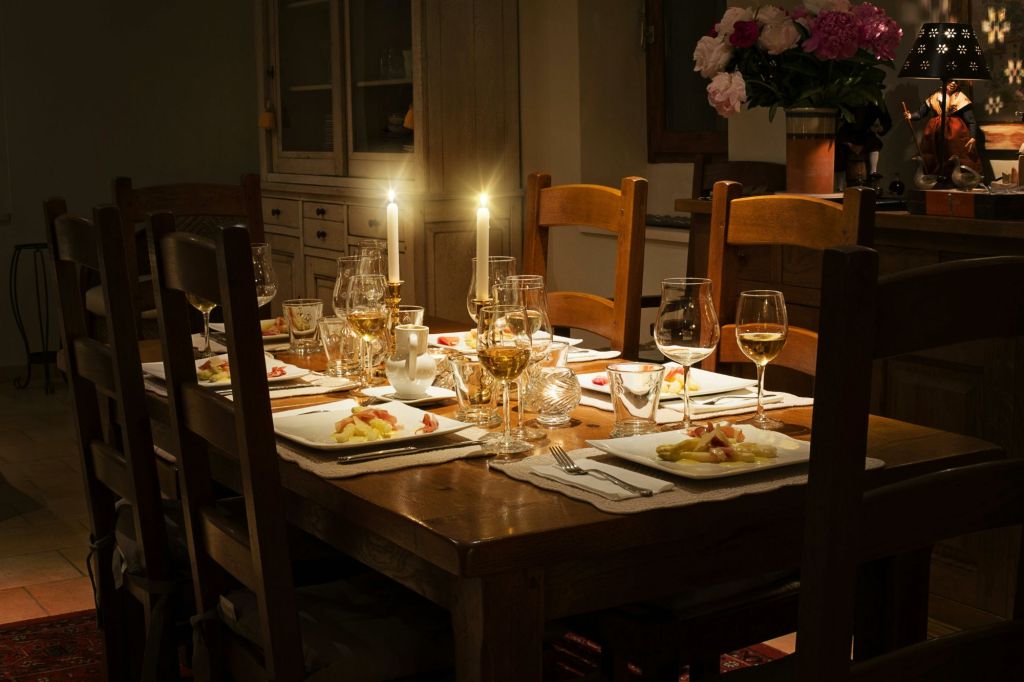
I would like to meet each of these women and chat awhile. What they contributed to history took grit and determination that I admire. If we all had dinner together, what a night it would be.
 King's Daughter's Kitchen